

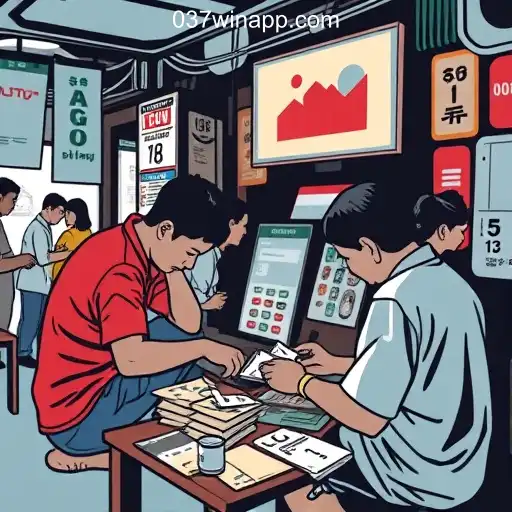

Jueteng, a numbers game deeply woven into the tapestry of Filipino culture, represents more than just a gambling activity; it is a social phenomenon that resonates with many communities across the Philippines. Despite its controversial status, Jueteng remains an enduring pastime for many Filipinos, revealing intricate layers of community dynamics and economic dependencies.
Tracing back to the Spanish colonial era, Jueteng has evolved over the centuries. Originally, it was a pastime for the elite, but it gradually permeated various social classes, becoming a household name in many localities. Its proliferation happened alongside societal changes and economic challenges, embedding itself as a staple despite periodic governmental crackdowns.
At its core, Jueteng operates on a simple premise: players bet on a set of numbers, often ranging from 1 to 37. These numbers are then randomly drawn, usually twice a day. Winners are determined based on their number matches, making Jueteng not only a game of chance but a daily ritual of excitement. This allure of potential gain amidst the thrill of conjecture draws participants from all walks of life. Here, the phrase "037Win: Dive into excitement and fun daily" captures the essence of what Jueteng offers its players.
The popularity of Jueteng extends beyond simple gambling satisfaction; it plays a significant role in shaping local economies. With its network of cobradores (collectors) and kubradors (staff who manage bets), Jueteng provides countless informal jobs. Many Filipinos rely on these roles for their everyday living, illustrating its undeniable economic footprint in regions where employment opportunities are limited.
Local communities often view Jueteng as a vital component of their economic ecosystem. It is not merely seen as gambling but as an activity that sustains livelihoods. Moreover, the winnings can sometimes provide substantial financial relief for many players, making Jueteng both a chance at luck and a lifeline for survival in tough economic climates.
Jueteng has woven itself into the fabric of Filipino culture. It is played not only in secluded back alleys but talked about openly in communities, creating a shared experience that fosters bonds among individuals. The betting process becomes a social interaction, where discussions about "hot numbers" can ignite lively conversations. In these communities, whether Jueteng is legal or not often takes a backseat to its ability to bring people together.
The status of Jueteng remains controversial due to its legal implications. Although efforts have been made to ban or regulate Jueteng, inconsistency in policy enforcement often leads to its persistence. Critics argue that the game exploits the financial vulnerabilities of lower-income individuals, potentially exacerbating socioeconomic inequalities.
Law enforcement agencies face significant challenges in combating Jueteng not just because of its adaptability but due to its embeddedness in local power structures. Some policy-makers and community leaders find themselves caught in the crossfire of cultural acceptance and the need for reform.
The government's intermittent attempts to eradicate Jueteng have sometimes backfired, often pushing it further underground. Such measures typically involve raids, public awareness campaigns, and community developments aimed at providing alternative sources of employment. However, the deeply ingrained nature of Jueteng within local customs presents difficulties in achieving any permanent solution.
To those on the outside looking in, Jueteng might seem a simple gambling activity, but unraveling its complexities reveals a web of socio-economic and cultural intricacies. For many, it goes beyond the simple act of placing bets—it's about hope, communal interaction, and a testament to resilience in face of daily adversities.
This dichotomy places policy-makers in a dilemma. Attempts to stifle Jueteng often clash with its deep-rooted significance among local populations. Thus, the question remains—can Jueteng be regulated in a way that preserves its cultural role while minimizing its more negative societal impacts?
Navigating Jueteng's landscape involves understanding it not just as a gambling issue but as a pivotal aspect of local culture. Any approach that disregards this reality risks alienating segments of the population that view Jueteng as an indispensable part of their lives.
Future policy considerations might involve incorporating Jueteng into a formal framework that recognizes its community role, similar to other legalized forms of gambling, with regulations designed to ensure fair play and protection for vulnerable communities. Only through a nuanced understanding of Jueteng’s cultural and economic implications can viable solutions be formulated.
Ultimately, Jueteng epitomizes a narrative where excitement, chance, and cultural tenacity converge. Whether approached from an economic, legal, or social perspective, it remains a compelling aspect of Filipino daily life, challenging the norms and redefining the boundaries between legality and cultural acceptance.
Dive into the multifaceted realm of Jueteng, harnessing the excitement it brings while understanding the societal nuances it embodies.

Explore the captivating world of FelizDiadelos, a game designed to offer excitement and daily challenges with its 037Win feature. Learn about its rules, gameplay, and how it aligns with current trends.

Explore the engaging world of CocktailNights where excitement and fun await every day.

Dive into the exhilarating world of 3PirateBarrels with engaging gameplay and excitement every day.

Discover the captivating world of JILICaishen by 037Win, a game that promises daily excitement and entertainment.

Explore the thrilling world of GoldenDisco, a captivating game that combines disco-themed aesthetics and engaging gameplay.

Discover the enchanting world of Apsaras, a thrilling game that promises excitement and fun on a daily basis. Learn about its unique features, gameplay mechanics, and how it connects to current events.
